Skipping $2m EBITDA Deals ("The Messy Middle")
Dan Tamkin of Resurgent Capital Partners shares his barbell strategy for lower-middle market PE deals, avoiding the "messy middle" to maximize returns.


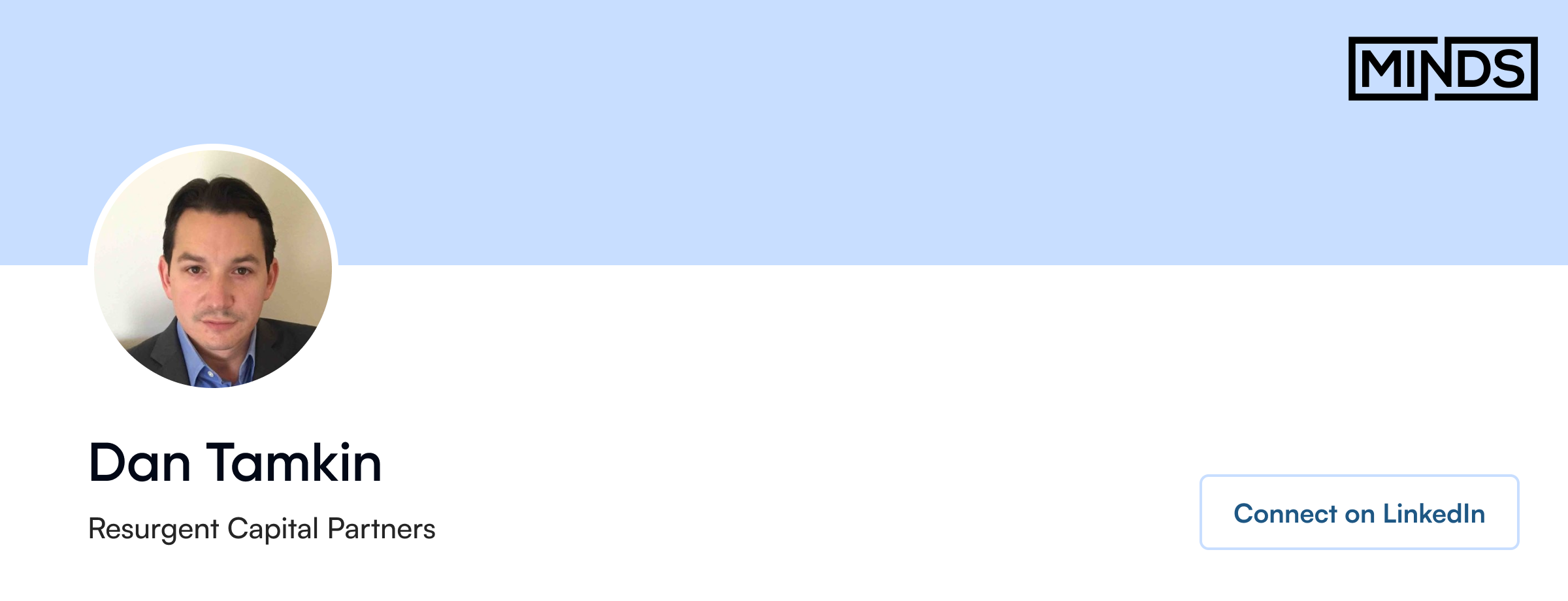
Dan Tamkin, based in California and co-founder of Resurgent Capital Partners, is an operator, technologist, and turnaround investor, in that order. After a career revolving around tech turnarounds and challenged VC portcos, he has found the lower-middle market to be a better channel for value creation, especially when done via the deal-by-deal model of independent sponsorship.
Resurgent began in 2017 and now has a portfolio of 6 platforms, split 3 vs. 3 between larger deals that required external equity and smaller companies they could buy outright. They follow a barbell strategy: concentrate on very small deals (~$0.5m EBITDA) that they can control and on larger deals ($5m+ EBITDA) where the upside is meaningful, while avoiding the middle, while skipping the $2-4m EBITDA range. Their underwriting targets an "acceptable return" by keeping stable and/or fixing 1–2 core issues, then views "explosive return" as a potential that can materialy if one or more growth levers are realized.
They built Resurgent through bootstrapping. Dan had a consulting turnaround job that generated revenue which seeded Resurgent. His partner, Bryce, used that runway to source deals, travel, and acquire a small cash-flowing asset. This early holding created a track record and stable income.
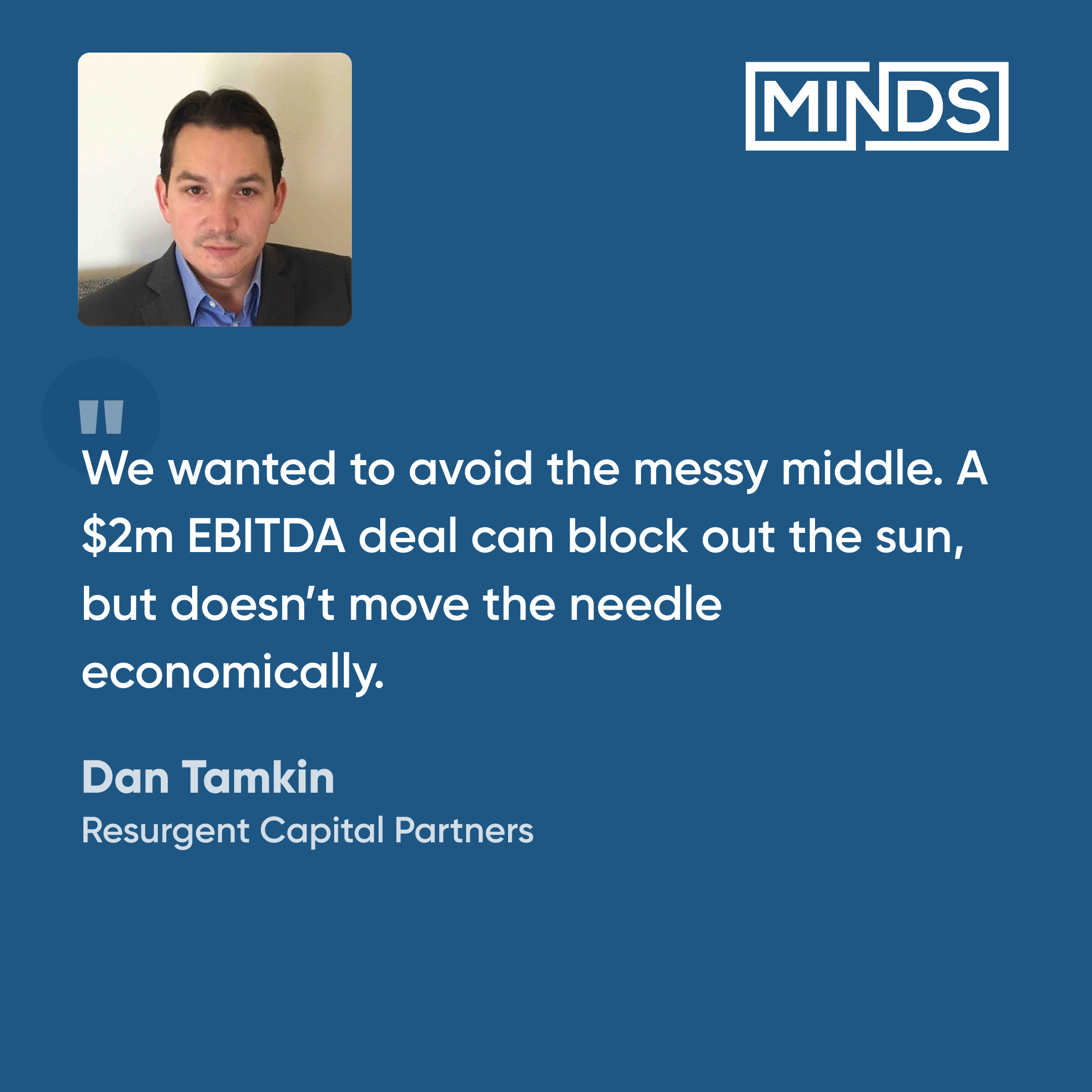
Dan warns repeatedly about the $2m EBITDA case study, which he calls "the messy middle." Here's his math: Buy at 5x ($10m EV), double EBITDA to $4m over 5 years, and exit at 5x again ($20m EV). After 20 percent carry, fees, and taxes, the sponsor duo might net only ~$500k per partner for years of work.

He contrasts the lower-middle market PE with venture capital. In VC, boards are composed of fund investors who have different fund timeline, portfolio pressures, and motivations, all of which skews and delays decision-making. The lower-middle market offers a dynamic with stable businesses under clear ownership, a couple of discrete, endogenous* fixable problems, and achievable value creation without relying on optimism about market dominance.
More recent episodes

Carving Out an 8x MOIC in 3 Years
Doug Song shares his independent sponsor journey, co-sponsoring strategy, and advice on navigating today's capital landscape for dealmakers.

Quadruple EBITDA in 3.5 Years, Then Exit at 14x
From theater to PE: How Cory Sandrock applies stagecraft principles to build successful businesses, attract partners, and deliver exceptional returns.

Pushed Out by Anchor Investor
Learn how Neal Doshi recovered from a devastating anchor investor betrayal to build a successful acquisition strategy with valuable lessons for independent sponsors.